Wow.
You get the original NWN2, plus Mask of the Betrayer and Storm of Zehir. You do not get Mysteries of Westgate, which is a shame. But that's another $9.99 at the Atari store.
Tuesday, December 20, 2011


Saturday, December 10, 2011
Got my old gaming PC running again
I've been playing NWN1 on my laptop, which works ok except that it invariably freezes after about 45 minutes of play. I'm not sure why. Might be heat thing. Or it might be Windows XP emulation thing.
 So, I finally figured out how to get my old gaming rig (purchased to run NWN2) running in the family room. It's surprisingly accessible and non-disruptive to family life, though the fan is still loud as all hell. It's running NWN1 flawlessly, with sound via some wireless headphones I bought a while back. It's really great--I forgot how much difference a full-sized monitor makes.
Now if only I could find my nwn2 disks....but they seem to have gone AWOL. I have no idea where they might be. Would be fun to fire it up and see what people in the modding community did with it.

Now if only I could find my nwn2 disks....but they seem to have gone AWOL. I have no idea where they might be. Would be fun to fire it up and see what people in the modding community did with it.
Saturday, December 3, 2011
Scanning Tokens for use in MapTool
The first adventure my group is likely to have upon arriving in Fallcrest is an encounter with the River Rats of the Lower Quays. I have this all designed in Masterplan, but I'm building it in MapTool so I can run it with my group online.
Tonight's job: Scan in my Threats to the Nentir Vale tokens. This was a pretty quick job. I scanned at 300 dpi, and then applied a blur filter in Gimp to get rid of the pixelation that seems to come with scans of printed materials like this.
 |
| Just add heroes! |
The result is very nice (the blur just undoes some needless sharpening that the scanner seems to add), and very easy to copy over into TokenTool! Now that I have it ready, I can create tokens in MapTool quickly for anything in this second Monster Vault. The result, when coupled with an export from Masterplan's fabulous tile-based map editor, is an awfully darn good looking encounter (right).
I need to playtest a few possible ways to model the Market Green Grifter's "play dead" power. I could actually kill her in MapTool, but at this point I'm leaning toward just making her go unconscious for a round so that I don't break anything. That way, MapTool should properly handle area spell damage and such that might affect her... and heroes can still attack her if they can beat the insight check. We'll see what I come up with.
As a side note, I absolutely adore Monster Vault: Threats to Nentir Vale. Monster Vault was fine, but the availability of a specific setting allows this one to be far more specific and far more interesting. The monsters are varied and each has interesting aspects to it: both stat blocks and story. The villains are terrific. And best of all, for those not playing in Nentir Vale, it's all pretty easy to plop the content down in anyone's home campaign setting. Highly recommended!
Friday, December 2, 2011
DnD with kids: use of maptool
I haven't been very active of late. There are a few reasons for this. First, over Thanksgiving, I played a lot of DnD with "my group," which includes my daughter, sister-in-law, and her two children. We had a great time, but learned a few things in the process:
1. It's virtually impossible to play more than one encounter at a time with 5- and 6-year olds. And even then, if the encounter goes over 45 minutes, they're pretty much hopeless.
2. The math isn't a horrible barrier for 5- and 6-year olds. But with the focus on die rolling and math, the roleplaying immersion is easily lost, because it takes everything they have to make it work. This goes for me too--since I'm keeping track of the girls' HP in addition to the monsters, I'm involved in every move, and it's easy to forget to do things like roleplay the villain and have him taunt the players.
3. A level 5 encounter is waay too much for my party of level 1 players. If you've played Twisted Halls, you know the final encounter: three level 3 soldier skeletons, 1 hulking zombie, and 1 necromancer. The necromancer doesn't even get involved until one of the undead perish. Even so, the party was pretty overmatched, with our slayer going down in the second round, and damage dealing far outstripping the healing abilities of the party. And that's even with Smite Undead dispatching the zombie down the hallway for several rounds (pushed 6, can only move 4 squares).
I ended up having to fudge rolls like crazy to keep the party afloat. Even so, everyone was bloodied by the end, and everyone had spent ther healing spells and second wind.
4. Not playing often makes me feel frantic to play whenever we do have a chance to play. We ended up playing several times per day for three days in a row, which I think we starting to get old for everyone at the end of the day.
Solutions?
I don't have a solution for #3, aside from more slowing increasing the difficulty level than I had been doing. But I may have a tentative solution to #1 and #2: Maptool.
Maptool is a package that allows you to conduct DnD games (or most other games) online. This is why I looked at it in the first place, as half of the group lives two hours away and we only get together every few months.
Thanks to the impressive work of other Maptool users and developers, however, there are frameworks available for download that allow for varied levels of integration of 4e rules directly into the software. Some essentially are designed to just help you keep track of each PC and NPC's stats, and leave it to the DM to impose damage, conditions, etc, as appropriate. Others are more in depth and allow you to automate many aspects of DnD combat.
The one I've been setting up is Rumble's 4e Framework, version 5. While its character management isn't as nice as some other frameworks, (it only tracks weapons and implements, doesn't calculate AC or defenses, etc), it is pretty easy to use this framework to automate most aspects of combat: attack/damage rolls, damage dealt, resistances, condition imposition and expiration, etc. In fact, the only thing it doesn't do automatically are a) forced movement (the DM still has to move the monster), b) delayed condition changes, like sleep spells causing unconsciousness on the first failed saving throw, and c) prompting a player to make a saving throw off of its turn in response to a cleric power (though you can include text reminders to prompt a DM to do each of those events). Everything else, for the most part, is done pretty easily with zero knowledge of scripting.
It does take some time to learn how the framework operates, and to get the characters and monsters into the software. But when you do, the result is something that almost resembles a video game! I think this will work very well for my group. Going back to the problems above:
1) This should speed up combat dramatically. What was once a minute long sequence of rolling, adding bonuses (kids take a while to do this), announcing the attack number, rolling damage, adding again, announcing the damage number is now three clicks: once to select your attack power, once to target, once to hit "ok" (assuming no modifiers are needed like CA, but even that's just another click away). The faster the combat, the more focused everyone will be at the "table."
2) Less math. There still will be some, and I'd like them to be aware of it. They'll see the numbers, and we'll talk about damage modifiers now and then. But at the same time, they'll have more fun if they can focus on the roleplaying, rather than just adding attack modifiers to dice rolls. It also frees me up a lot. I won't have to try to remember every status effect (even with colored hair band markers, that's hard to do) and everything else going on, which will make it easier for me to roleplay as well.
3) While this doesn't directly solve the problem of encounter difficulty catching me off guard, it will allow me to playtest challenging encounters on my own really easily. I want to do the occasional level+3 encounter, but I want it to be possible! With Rumble's framework all set up, DnD plays like a video game!
That said, I will have a hard time fudging attack/damage rolls using the software, so I'll have to have a back-up intervention scenario should I achieve a TPK...
4) We get to play outside of family gatherings. By playing online, we can be less frantic about getting our gaming in when everyone gets together. This should make family events less about DnD than this past Thanksgiving was. I know I'll like that, because it'll let me care a lot less about whether we get to play when people get together.
Anyway, I'll have more on MapTool (and Masterplan, which I'm also using and loving) in the future. But if you haven't checked it out, you should really do so. I'm looking forward to giving it a whirl with actual players....once I get my monsters and maps all set up for our adventure! :)
1. It's virtually impossible to play more than one encounter at a time with 5- and 6-year olds. And even then, if the encounter goes over 45 minutes, they're pretty much hopeless.
2. The math isn't a horrible barrier for 5- and 6-year olds. But with the focus on die rolling and math, the roleplaying immersion is easily lost, because it takes everything they have to make it work. This goes for me too--since I'm keeping track of the girls' HP in addition to the monsters, I'm involved in every move, and it's easy to forget to do things like roleplay the villain and have him taunt the players.
3. A level 5 encounter is waay too much for my party of level 1 players. If you've played Twisted Halls, you know the final encounter: three level 3 soldier skeletons, 1 hulking zombie, and 1 necromancer. The necromancer doesn't even get involved until one of the undead perish. Even so, the party was pretty overmatched, with our slayer going down in the second round, and damage dealing far outstripping the healing abilities of the party. And that's even with Smite Undead dispatching the zombie down the hallway for several rounds (pushed 6, can only move 4 squares).
I ended up having to fudge rolls like crazy to keep the party afloat. Even so, everyone was bloodied by the end, and everyone had spent ther healing spells and second wind.
4. Not playing often makes me feel frantic to play whenever we do have a chance to play. We ended up playing several times per day for three days in a row, which I think we starting to get old for everyone at the end of the day.
Solutions?
I don't have a solution for #3, aside from more slowing increasing the difficulty level than I had been doing. But I may have a tentative solution to #1 and #2: Maptool.
Maptool is a package that allows you to conduct DnD games (or most other games) online. This is why I looked at it in the first place, as half of the group lives two hours away and we only get together every few months.
Thanks to the impressive work of other Maptool users and developers, however, there are frameworks available for download that allow for varied levels of integration of 4e rules directly into the software. Some essentially are designed to just help you keep track of each PC and NPC's stats, and leave it to the DM to impose damage, conditions, etc, as appropriate. Others are more in depth and allow you to automate many aspects of DnD combat.
 |
| MapTool + Rumble + Masterplan is amazing. |
It does take some time to learn how the framework operates, and to get the characters and monsters into the software. But when you do, the result is something that almost resembles a video game! I think this will work very well for my group. Going back to the problems above:
1) This should speed up combat dramatically. What was once a minute long sequence of rolling, adding bonuses (kids take a while to do this), announcing the attack number, rolling damage, adding again, announcing the damage number is now three clicks: once to select your attack power, once to target, once to hit "ok" (assuming no modifiers are needed like CA, but even that's just another click away). The faster the combat, the more focused everyone will be at the "table."
2) Less math. There still will be some, and I'd like them to be aware of it. They'll see the numbers, and we'll talk about damage modifiers now and then. But at the same time, they'll have more fun if they can focus on the roleplaying, rather than just adding attack modifiers to dice rolls. It also frees me up a lot. I won't have to try to remember every status effect (even with colored hair band markers, that's hard to do) and everything else going on, which will make it easier for me to roleplay as well.
3) While this doesn't directly solve the problem of encounter difficulty catching me off guard, it will allow me to playtest challenging encounters on my own really easily. I want to do the occasional level+3 encounter, but I want it to be possible! With Rumble's framework all set up, DnD plays like a video game!
That said, I will have a hard time fudging attack/damage rolls using the software, so I'll have to have a back-up intervention scenario should I achieve a TPK...
4) We get to play outside of family gatherings. By playing online, we can be less frantic about getting our gaming in when everyone gets together. This should make family events less about DnD than this past Thanksgiving was. I know I'll like that, because it'll let me care a lot less about whether we get to play when people get together.
Anyway, I'll have more on MapTool (and Masterplan, which I'm also using and loving) in the future. But if you haven't checked it out, you should really do so. I'm looking forward to giving it a whirl with actual players....once I get my monsters and maps all set up for our adventure! :)
Monday, November 14, 2011
Going without the DDI Character Builder

Probably the most essential application on there, however, was the Character Builder. While I enjoy the process of character building, as a new player I'm prone to making errors (e.g. I just discovered a few nights ago that shields give you a bonus to both AC and Dex). Furthermore, the product that the character builder creates is very nice; the character sheets were far easier to use for my new/young players, and the power cards were terrific. Furthermore, I loved how easy it was to roll up a character, paruse the various feats and powers, etc. It reminded me a lot of the Neverwinter Nights character creation engine, in fact.
The problem with DDI is that it's expensive. My wife is already bothered enough by my return to overt geekery over the past few months. Spending $70/year on a subscription to DDI isn't something that is going to be an easy sell in my household.
So instead, as my subscription lapsed a week or so ago, I began looking around to see what else I could use to manage my characters. After a fair bit of trial and error, here's what I came up with.
The Character Sheet
I wanted something that would do some of the basic, repetitive calculations for me. The logical thing to do, therefore, was to build something in my old standby, Excel. After spending about 15 minutes working on it, however, and realizing how much work it would take to get it formatted prettily, I decided to look around and see what people had already done. :)
There are some very complicated spreadsheets out there that try to essentially replicate the Character Builder in terms of scope (e.g. this one). I wanted something more flexible, though, so that I could work up the characters myself and only rely on the sheet to do basic things like add my +1/2 level every time I leveled up.
I found this one by Rohin Joyce, which I just adore. It does all the basic calculations for you, but leaves a lot of room for customization. At this point, I'm using it with only small modifications to create my characters. But then, I'm pulling data from it to create a kid-friendly character sheet that I put together myself. Here's the result:

Obviously, I left out a lot of stuff. I didn't even give them their attribute scores, for example--just the modifiers. But as Mike Shea has pointed out (somewhere, sorry, I don't have a link), all that really matters is the modifier anyway! Omitting attribute scores just saves newbie confusion. I'm also omitting deities (which won't play a big role in my game, at least for now), action point trackers (I use tokens), feats, etc. All of that stuff is on the other character sheet, which can be printed out and stapled beneath this one.
With the exception of the notes part, and the graphic, which will need to change for each character where it pulls its info, it's entirely automated. Fill out Rohin's character sheet and all of this populates. It's just more approachable for my players to use this in the game. If someone is interested, I'll post it. Just let me know.
What About the Power Cards?
A nice excel-based character sheet is great, but I really became infatuated with the power cards that the Character Builder generates. My players responded very well to them in our last session, so I wanted to make sure that I still have something workable. I originally planned to just make them in excel, but I ran across this thread about using a Magic the Gathering card editor, with an all-text template, as an alternative. Here is a screenshot of the result:

I absolutely adore these. I'm able to make cards that are bigger, cleaner, and easier to use than what the character builder generates. Even cooler, I can use it to generate treasure cards in advance that I can hand to players as they uncover magic items. Here's what I'm handing out over the rest of the Twisted Halls:

How cool is that?
What have you done to work around the DDI Character Builder?
Sunday, November 13, 2011
Essentials Magic Item List
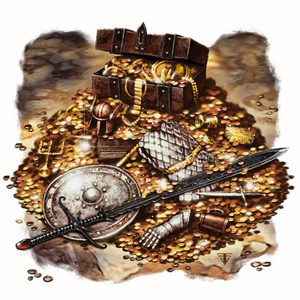
The one stumbling block to this process has been finding appropriate magic items. The DM Kit tables will tell you to give an item of a specific level and rarity value (common, uncommon, etc). I'm currently running with only the Dungeon Master's Kit and Heroes of the Fallen Lands, and as a result I have a limited supply of magic items at my fingertips. This can make it hard to find, for example, a level 6 uncommon item, especially if I'm trying to get something for a particular player. And the process is made all the harder by the fact that I haven't found a good index of the magic items in these books. So, I decided to make one.
As I acquire other sources (I'd really like to get Mordenkainen's...), I will no doubt add to this spreadsheet. But for now, this is what I have. I'm posting it here in case someone else can use the info.
Friday, November 11, 2011
Today, we defeated the Frog Wizard
After a bit of time off, we resumed playing rpgKids and defeated the Frog Wizard! Huzzah!


Sunday, October 30, 2011
Damage by 3d6
I'm kind of a sucker for these things. My favorite part of this one is guy drumming with a dagger, but some of the lyrics are fun. "Once again his armor class is not enough to save his ass!"
Hell, yeah!
Hat tip to critical hits link round-up from last week.
Hell, yeah!
Hat tip to critical hits link round-up from last week.
Thursday, October 27, 2011
D & D Doodle Index (and Love)

One of the fun things about being so late on the scene with DnD 4e is that I get to discover wonderous things that people have probably known about for a long time. One of those is the work of Brandon Kruse at DnD Doodle. His masterpiece reimagining of Fallcrest is to the right, and has been widely circulated, often without credit. I myself first found it at an Obsidian Portal website.
The thing that's so exciting about Brandon's work, aside from its obvious brilliance, is his cartoony style. Since I'm largely running my campaign for a group of little kids, I want to try to keep things a bit lighter than a lot of campaigns probably do. As such, the stock DnD art isn't always ideal. Kruse's area maps invoke excitement and fantasy, while his character sketches have a whimsy and humor that I think the kids will find very approachable. For this reason, I've largely abandoned my plan to get my players into the Forgotten Realms as soon as humanly possible. The Nentir Vale will work great, mostly because I get to use this art!
I'm using Masterplan now to write my post-Twisted Halls adventure, and one feature I really like is the ability to broadcast maps to the players via a separate monitor attached to my laptop. I'm planning to use this ability, and/or some powerpoint slides that do the same thing, to send a lot of Kruse's images to the screen. My players will be able to see the town, the buildings they will visit, and even characters via this interface. It should be a lot of fun.
As such, I've decided to do a quick index of Brandon's work here in this post. I'm doing this mostly for myself, but if someone out there finds this useful, rock on.
Maps
Along the King's Road
Cave Drawing
Dwarftown (his version of Hammerfast)
Dwarftown - Top Floor
Dwarftown Underground
Fallcrest
A Generic Town
Goblin/Bandit Camp
Harkenwold
The Lonely Tower
Nenlast
Nentir winding way out of vale
The Restwell Keep on the Chaos Scar
River RoadRoad to fallcrest - Similar to below scene, but more of a map
A road through the wilderness (DM + Player)
Rushbottle and Camp Ozborg (south of Vale)
Thunderspire and surrounding areas
Winterhaven DM Map
Scenes
Another road to Fallcrest
Fallcrest in Flames
On the road to Fallcrest/Moon Hills
Winter Ruins
The Rainy City
South of Nentir Vale
Wintery farmland...or blockade
Locals
Blue Moon Alehouse
The Lucky Gnome
Nentir Inn
Nentir Inn Second Floor
Nentir Inn First Floor
Raven Roost
Tower of Waiting, Nentir Inn, Blue Moon Alehouse
Named Characters
Princeling Ardjuna
Redlock
Serim Selduzar, Orest Naerumar, High Priestess Dirina Mornbrow, Par Winomer of the Blue Moon, and Lord Walden Faren Markelhay
Grundelmar, Lannar Thistleton, Lady Allande Markelhay, Sergeant Thurmina
Sergeant Gerdrand, Lord Amos Kamroth, A River Rat, Wisara Osterman of Silver Unicorn, Kelson of Lucky Gnome
Irena Swiftwater, Nimozaran the Green, Tobolar Quickfoot, Teldorthan Ironhews
Raven Roost Roster
Gragnok, dragonborne paladin
Random Characters
Random People
Vikings
Owlbears and Orcs
Owlbears and other misc
Mostly guns, but a few fantasy, including goblin king
Wizards, lizardmen, wolves
Wizards and barbarians
Adventurers and a Kobold
A noble, robber, knight
Kids, or hobbits, plus dark rider
Goblin Golfers
Half-Orc
Randoms, w/ briest, witch, devils
Skeletons with Turbins
Gnoll Archer
Mehrat Sorcer and other creatures
Dragonborne
Merchant on road
Monday, October 24, 2011
Custom Solo Creature: The Giant Crocodile
Set up: the adventurers are entering an actively used mine. As a minor (miner? haha) quest, the mine foreman asks them to try to figure out what happened to one of his miners. The adventurers walk through the mines and come upon a "break room." The room is a part of a cave that ends in a pristine underground river with good drinking water. The room includes bed rolls, a campfire, stools, a make-shift picnic table, etc. Miners often use this room to eat, sleep, etc.
Adventurers will notice that there is an abandoned pick-axe near the shore. As they approach the shore, a gigantic crocodile leaps from the water. If you've seen Crocodile Dundee, you might remember a similar scene involving a water bottle. If the crocodile makes a stealth check against the characters' passive perception, it gets a surprise attack round to open combat. Here's the monster:

When they defeat the monster, adventurers may cut open his gut to find a treasure parcel, which includes a locket bearing the lost miner's name. Returning the locket completes the quest.
Thursday, October 20, 2011
First Impressions: rpgKids

Because we may go months in between sessions (rest of family lives a few hours away), I've been toying with playing a solo game with my daughter on the side. It was with that thought in mind that I happened again upon NewbieDM's rpgKids, a simplified game inspired by 4e dnd that is appropriate for a little kid.
I ponied up $5 for the original package plus his just released expansion pack. The rules are pretty simple, but there's decent depth to them. There are four classes (equivalent to ranger, fighter, wizard, and cleric), each with their own style of attacks and a unique set of skills. But regardless of your class, all combat ultimately comes down to competing dice rolls: the hero rolls a d12 against the monster's d12, and if the hero gets a higher roll, he hits the monster. There are a few roll modifiers, and you can complicate it as much or as little as you wish.
For example, I opted to add opportunity attacks and shifting to the game. This was easy to do, makes the game a bit more tactical, and will be good training for her when we go back to the bigger kid table with true dnd. I also opted to give the fighter-type class more "hitpoints," which I think are appropriate to help balance him against the other powerful classes. Coupled with opportunity attacks, this makes the fighter class an acceptable defender.

I had a blast too. Hopefully this will be a regular activity in our house! I highly recommend dropping $5 for rpgKids if you're looking for a fun, creative activity to do with your little kids.
Tuesday, October 18, 2011
Dexter's Laboratory: Monsters and Mazes!
Via @TheAngryDM comes this brilliance from the archives of Dexter's Laboratory:
Dexter's Laboratory - D & DD
Vezi mai multe video din animatie
Dexter's Laboratory - D & DD
Vezi mai multe video din animatie
Monday, October 17, 2011
App Review: RPG Roller v.2.1 by Moondog Software
 |
| At its most simple: tap the button to roll whatever combination of dice you desire. |
This is an application designed for efficient play at a game table. It does not try to recreate "the experience of rolling dice." Instead, it is a customizable random number generator. The most straightforward way to use the application is to use the Quick Buttons tab (right), which allows you to roll any combination of dice you could imagine (you sweep your finger to access bigger dice--d10's, d12's, d20's, and d100's). Simply tap the button you want and your roll appears as a huge number in the middle of the screen. If you blink/forget, it also shows the most recent roll in the upper right-hand corner. You can also access your roll history via the tab at the bottom.
 |
| Players can add customizable buttons for each attack and damage roll. |
But if you desired, you could do what is shown to the right and create buttons for each attack and damage roll. You can edit the formula to include any modifiers you desire. For example, a Fledgling White Dragon's bite does 1d12+6 damage. This can be programmed into a button. When you push it, it will give you a number between 7 and 18. It's neat.
For DMing, I prefer to just add in the modifiers myself, as the setup time to customize buttons for every single monster is a bit too much for my taste. But a player might find it worthwhile to program all of his/her rolls into the device, since there are fewer combinations. This could be especially helpful for younger players who are a bit slower with the math. You can use color codes to help you find buttons on the screen too, which is neat.
There are other nice little features. For example, you can go into the More tab and select "chart" and see a random distribution histogram for whatever roll you most recently submitted, along with summary statistics. Beyond tickling my stat-nerd fancy, I can see this being handy when explaining the difference between a 1d12 and a 2d6 weapon. There's also an option to prevent the iPhone screen from shutting down when the app is running, which is very nice when DMing so there's never a delay when I need to roll. You also can customize the sounds. If you like, the app can make a noise that sounds like dice rolling whenever you roll. I prefer a simple "click" sound to play along with the button press, and it does this as well.
I have two minor complaints. First, the buttons are a little small. Since I'm usually standing when DMing, I'd prefer to have the option to have buttons twice the height shown here so that I'd have a bigger target. That said, I've yet to actually hit the wrong button as far as I know, so it's not a big deal.
Second, the input syntax for multiple dice rolls threw me for a small loop. I tried to input a dragon breath damage role of "2d8+4." This should give a range of results between 6 and 20 (2d8 give you 2 to 16, then you add four). The software, however, will give you results between 10 and 24. It's adding four to both dice. I had to contact the author to figure it out; to get it to work properly, you have to input "2d8 + 4" (note the spaces; this apparently is designed to help minimize the use of parentheses on complicated rolls, though I'm guessing it causes a fair bit of confusion by end users). Once you do it that way, it works great.
All in all, though, this is a terrific little app. It's faster and quicker than rolling actual dice, and it frees up my physical dice for my players to use. And it's free! While there is unquestionably an aesthetic value in rolling the actual dice on the table, there are situations (like mine) in which you need an alternative. If you're in one of those situations and have an iPhone, I highly recommend RPG Roller.
Saturday, October 8, 2011
The Last Will and Testament of James Darkmagic I

I get to DM my little family/kids game next weekend, and I'm really looking forward to it. The party has changed a bit, and should allow for a fun adventure through the Twisted Halls... More on that later....
Tuesday, October 4, 2011
Savant of Aielund Saga on NWN Podcast
 This afternoon on my drive home I got a chance to listen to Savant on the Neverwinter Nights Podcast talking about his modules as well as his book. It was sort of a shame that the interviewers weren't really aware of his work, as Savant is one of the most accomplished module builders for NWN1, right up there with Adam Miller, Kevin Chan, and Stefan Gagne, and Alazander (to name a few). That said, there is no one doing more for the NWN community right now than the podcast guys, so it's hard to get too upset at that. :)
In all, I enjoyed the interview tremendously. Savant seems like a very nice guy, and I'm thrilled for him that he has a book out now. I went ahead and purchased it via kindle (using the iphone app...small screen, but I'll eventually upgrade to a ipad...I think), and will give it a read as time permits. If nothing else, it's a very modest donation for the time and joy that Savant has given me as I've played through his modules. :)
Speaking of books, I checked and saw that Alazander's book is still in progress (with an update as of Sept 21st). Any other book authors out there from the NWN community that I'm forgetting?
Tuesday, September 27, 2011
Module Review: The Aielund Saga I - Nature Abhors a Vacuum
 |
| I'll never get tired of that castle. |
In any case, I finally finished it tonight. It was a thrill. Here are my comments.
My vote: 9.5 - Excellent, Recommended to Anyone
My character: lv 1 dwarf fighter, reached level 8 by the end of the module.
I voted on this module, under a different name (Brandiles), back in April 2005. I just finished playing through a second time, which allowed me to experience all of the new updates to the module. These include the fantastic tilesets that debuted with Darkness over Daggerford, as well as a bunch of new touches and features. It's been long enough that I remembered very little of the module, so I felt like I was able to experience it all again for the first time.
Wasn't expecting to find you guys down here...
The strengths of this module are numerous. Combat is engaging, challenging, but feasible--especially if you pay attention to your usable items. The story is well delivered, though is a bit railroaded at the beginning before opening up considerably. The ending is more or less on rails too, but the story compels this and it seems natural. The characters, and especially the henchmen, are real delights, with well-defined personalities that add flavor throughout the module. And the module's final chapter really cranks up the intensity, and ends in a dramatic final encounter against a principle enemy that was staged well and was gratifying.
In the end, any critiques I can offer are pretty minor. I wish I somehow had more opportunity to learn about the main villain in this module, because named foes are pretty rare in this module and it seemed as though he was interesting (though I vaguely remember him coming up again later in the series). I also wish there was a bit more choice in the early goings. In particular, it seemed like there should have been an option to circle around the town once you gain access to the exterior. I understand the design reasons for it, but I don't think this was well articulated.
Overall, it's just an excellent module, and is a tremendous kickoff for the series. I'm looking forward to rediscovering the next one!

Some other screenies after the jump:
Saturday, September 10, 2011
Playing: Aielund Saga

I never finished Aielund, though I played through at least the first several chapters and enjoyed it. Going back, I've been surprised to see it's been given a major facelift. Many of the areas have been reworked to include placeables from Darkness over Daggerford, and it fits beautifully.
Furthermore, I'm really enjoying how well it plays. My first two sessions were pretty linear, but as I ended tonight the sidequests were piling on fast! I'm not really sure what I'll do next. It's lots of fun, as many involve new areas to explore.
I'm also playing a fighter. I often look down on fighters, but there's no denying that it's fun to play the badass tank now and then. I love that he gets so many feats--makes me feel free to explore several weapon types (bastard swords!), feats I rarely take, etc. He's pretty smart, but unlike many of my characters, he (a dwarf) has a penalty to his charisma, so he misses many of his persuade checks. Somehow, that makes it all the more fun.
Anyway, more later. Time for play has been more rare since the semester started, so I cherish these rare chances..
Sunday, September 4, 2011
Review: Heart of the South I - Kaer Mulden
 |
| What is her deal? |
My character: lv. 1 fighter, did not reach level 2 by end.
I'm a sucker for anything Planescape. Or even planescapeish. This module, while not set in the planes or the City of Doors, and while never referencing the Lady of Pain, does a great job in the early goings of evoking the feel of Planescape: Torment. Flaws and all, P:T is still among the better games I've ever played, and from a story and atmosphere standpoint is second to none. You begin this module with absolutely nothing, and all the equipment and supplies you find throughout the adventure are below the quality of what you typically start with as a NWN1 character. There are quirky characters who seem to want nothing more than to manipulate you for their own sick larks, there is poverty, and there is a feeling of desperation in this module that is difficult to experience.
Unfortunately, beyond the atmosphere, the execution is poor. The story is very open ended, which is fine. But it does lead to one feeling rather lost at times, and while exploring randomly I happened upon a key event in the module that lead to what would be the next chapter. Combat is extremely difficult, and pretty frequent, so I have no idea why it's rated as combat light in the description. My fighter was hopelessly outclassed, and I ended up using a spoiler to figure out how to get a henchman to proceed in the module. Even then, I ended up dying frequently. In desperation, I started respawning...and discovered that there is no penalty for it. So, I ended up respawning every other encounter until I finally finished the thing. It was ridiculous. I think a dex-oriented fighter type might do ok here (?), but otherwise I'd recommend starting around level 3 or so.
It felt like the author had a very clear vision for the world he wanted to create. But when it came to the actual module, it just didn't come together. The story is mostly non-existent, combat is way over the top, and you never have the slightest clue as to what is going on. I enjoyed some aspects of this module, but I can't give it a solid recommendation.
Saturday, September 3, 2011
First pen & paper session tonight

I tried my hand at DMing tonight. I've spent the last week+ prepping for this, but somehow when the time came I felt pretty unprepared. I had my tokens all separated in baggies per encounter, pre-rolled monster initiative, notecards to hang on the screen for the turn order, etc. But when it was time to play, I couldnt find anything, I couldn't remember how certain powers worked, found myself rushing through monster turns, etc.
One thing I'm finding is that it's hard to run a PC--even one that's effectively a henchman--and DM at the same time. I wanted to have a third party member, and I like the character...and they badly need the cleric. But it's hard to use him effectively while simultaneously focusing on the monsters. With more practice I might do better, but if he dies it will be tempting to not replace him.
That all said, I had a lot of fun tonight. My nephew really enjoyed it, so hopefully we can continue this for quite a while during our visits.
In other news, I'm completely stumped on what to do next in Forbidden City. I left the author a note, but I'm about ready to hang it up and move on. I'm already probably 10 hours deep into this mod, and I feel like I've pretty much done the interesting stuff. I would like to get back to The Prophet series, but I'd also like to just play as a killing machine fighter for a mod or so. We'll see if anything strikes my fancy on the vault tomorrow.
Saturday, August 27, 2011
Getting to know pen & paper
My 4e starter kit arrived Thursday, and I've spent the last two nights reading through the solo adventure and the mechanics of the DM guide. It's been fun. I do like how you build a character through the narrative, and how it walks you through your character sheet. I just made a dwarven fighter, and he seems pretty effective--though I'd gladly exchange his greatsword for an sword/shield combo. This is not an option with the starter set.
I was surprised how many hp and such a first level character has (29 for my dwarf). I had read that level 1 is similar to level 5 of older dnd, and that seems about right. The monsters are pretty effective too, though. A goblin minion has a 15 AC, a +6 hit modifier, and does pretty significant damage.
After creating my fighter, I'm itching to work though Heroes and figure out how to roll up a character from scratch so I have more freedom and choice. Maybe later this weekend. I will probably make a cleric, rogue, and wizard using the starter set just to learn the rules of those classes, as they are nicely spelled out in the solo adventure.
The adventure that comes with the starter set seems fun. I will probably need to modify it, though. Counting my henchman, our crew will include three PC's--all novice players--and I'm worried that an adventure written for four PC's will be too hard. Fortunately, it looks like I will usually just need to pull out one npc per encounter to balance it for 3. Should be ok.
Mechanics of the encounters are fun. I see the reason for the power cards, because powers can become hard to track for a beginner like me. It looks like the standard (non-essentials) character sheets are designed to work better without cards, but I can see printing them for my players even after they have moved past the starter sets. Probably depends on how much time I have. I may be making monster tokens in that free time...
Anyway, I'm having fun. The dnd stuff has distracted me from Forbidden City, which is my current NWN mod that I'm playing. It's fun, but almost too open ended. At this point I'm just trying to find one last (I hope) boss to finish off the module, SP I'm scouring the city. I'm pretty ready to be done, so I hope I find it soon...
I was surprised how many hp and such a first level character has (29 for my dwarf). I had read that level 1 is similar to level 5 of older dnd, and that seems about right. The monsters are pretty effective too, though. A goblin minion has a 15 AC, a +6 hit modifier, and does pretty significant damage.
After creating my fighter, I'm itching to work though Heroes and figure out how to roll up a character from scratch so I have more freedom and choice. Maybe later this weekend. I will probably make a cleric, rogue, and wizard using the starter set just to learn the rules of those classes, as they are nicely spelled out in the solo adventure.
The adventure that comes with the starter set seems fun. I will probably need to modify it, though. Counting my henchman, our crew will include three PC's--all novice players--and I'm worried that an adventure written for four PC's will be too hard. Fortunately, it looks like I will usually just need to pull out one npc per encounter to balance it for 3. Should be ok.
Mechanics of the encounters are fun. I see the reason for the power cards, because powers can become hard to track for a beginner like me. It looks like the standard (non-essentials) character sheets are designed to work better without cards, but I can see printing them for my players even after they have moved past the starter sets. Probably depends on how much time I have. I may be making monster tokens in that free time...
Anyway, I'm having fun. The dnd stuff has distracted me from Forbidden City, which is my current NWN mod that I'm playing. It's fun, but almost too open ended. At this point I'm just trying to find one last (I hope) boss to finish off the module, SP I'm scouring the city. I'm pretty ready to be done, so I hope I find it soon...
Subscribe to:
Posts (Atom)