Showing posts with label books. Show all posts

Wednesday, November 8, 2017

The Subtle Knife by Phillip Pullman

I'm torn on this book.  On the plus side, The Subtle Knife really expanded the universe (universes?) of the series.  As it says in the introduction, the first book was set in a world like our own, but different.  This second book actually begins in our world, but then broadens in scope to a multiverse of settings that all seem to be connected, somehow or another.  Characters can slip from world to world via tears--cuts?--in the fabric of the universes themselves.

On the flip side, while the ideas were interesting, I just couldn't get into the story or the characters.  Lyra Silvertongue, the indomitable lead character from the first story, seemed relegated into supporting, and at times even...subservient?!...role in The Subtle Knife.  She took a back seat to Will, a strong-headed boy with a tough past and fractured family.  It's not that I didn't like Will, but I never really connected with him or understood what made him tick.  The story in this book becomes much darker, and old villains from the first book resurface more powerful than ever, to a degree that seemed contrived.

Ultimately, the book ended on such a down note that my daughter and I felt compelled to take a break from the series and seek out lighter fare.  It was disappointing, because we thoroughly enjoyed the strong female lead and empowering tale of the first book, and had hoped for more.

Dead Man's Steel

Dead Man's Steel is a good, satisfying conclusion the Grim Company trilogy.  We get complete character arcs for most of the key characters, and resolution of most of the conflict and drama set up in the first two books.  This is a rough world, and one can't expect everything to resolve in happy ending fashion.  Nevertheless, conclusion was fitting, appropriate, and compelling.

The book takes some significant risks.  We finally get to see the Fehd in their full glory, and it turns out that they come with a notable sci-fi slant to them that puts them at odds (intentionally) with the rest of this swords-and-sorcery universe.  Several of the seemingly-insurmountable foes go down relatively quickly, setting the stage of other, arguably even greater conflict as the book goes on.  When the dust settles, the author's playground will have permanently changed.

I think there were a few places where the book didn't hold together quite as well as Sword of the North.  We repeatedly get to re-live the various characters' astonishment at the technology of the Fehd, to a degree that seemed overplayed.  And as the disparate characters all converge together into one party fairly late in the novel, we can almost see the author's glee, but it results in some moments that were a bit too campy for my tastes.  Nevertheless, what I keep coming back to is how deeply satisfying it was to see virtually all of the many plot threads from the first two books run to their conclusion here, with innumerable unexpected twists and turns along the way.  It was a terrific series, with characters that I came to genuinely care about, despite their many warts.  I look forward to reading more from the author in this and other worlds.

4 out of 5 stars.

Tuesday, August 8, 2017

The Golden Compass by Philip Pullman

All her life, Lyra has lived at Jordan College in England.  She grew up among the old scholars as a rough-and-tumble rugrat, befriending the child servants who worked at the college, climbing the old buildings, exploring the old crypts, and generally getting up to as much mischief as she could.  One time, as part of a "war" between groups of children, she ended up stealing a houseboat and cruising down the river with it.  That all changed one day when her mysterious uncle, Lord Asriel, came to visit the scholars of the college, only to have the master of the college attempt to kill him...

The Golden Compass was a really interesting book.  It provides an alternate reality that differs in only a few ways from our early-1900's Europe.  Most significantly, every human possess a daemon, which is a sort of animal familiar that serves as an immediate animal companion throughout their lives.  In early life, daemons can shift between forms at will, but around the person's puberty, the daemon will take on a permanent animal form.  While the book is the story Lyra's journey, much of the mystique and conflict revolves around the connection between a person and her or his daemon.  Lyra travels to cities and to the frozen north, befriends a sentient armored bear, and earns the name of Lyra Silvertongue.  It's a heck of an adventure.

I read this with my 8-year old daughter.  It's probably the most mature book that we've read together.  She is a veteran of the Warriors series, which has its share of violence, but other parents should know that bad stuff happens in this book.  Despite the fairly slow and stodgy beginning of the story at Jordan College, she loved the book from the start.  A lot of that probably has to do with Lyra, who is a willful, strong, kid who loves to push boundaries.  We both enjoyed the book a great deal.  We're moving directly into book 2.  A clear 5/5.

Wednesday, February 1, 2017

Red Seas Under Red Skies by Scott Lynch

I've seen The Lies of Locke Lamora described as a sort of Ocean's Eleven story in a fantasy setting.  That's arguably how that book begins, but unlike Ocean's 11, you never really get to see a plan develop past its fledgling stages, much less come to fruition.  While things hardly could be said to go according to plan in this story, I think the Ocean's Eleven descriptor fits Red Seas Under Red Skies far better.  Locke and Jean spend two years planning an enormous heist, and you get to follow along as they ride by the seat of their pants, somehow navigating death trap after death trap as they work toward their goal.  If anything, much of this story is even more light-hearted than the first novel.  It no doubt helps that, by now, I am firmly in Locke and Jean's camp, and revel in their witty banter and outrageous hi-jinks, whereas it took me a while to warm up to the characters in the first novel.

That's not to say that there aren't poignant scenes.  As the novel's great twists and turns throw Locke and Jean into ever more dangerous situations, they make friends--and those friends are thrust into those same dangers.  The book somehow managed to keep a smirk on my face for most of it, but still created deep, heartfelt emotion; that's quite a feat by the author.

If there's a criticism to levy at the novel, it's that the story is a bit convoluted.  There are major swings in the narrative that require entire plot lines to be suspended for major parts of the book.  Nevertheless, it does all come together by the end, in one form or another, even if not exactly as one might expect or hope.

But...the characters!  Gods, the characters!  It's not just Locke and Jean, who have risen in my view to one of the best duos in fantasy history.  But their companions in this tale are original, vividly realized, and yet somehow do not pander to the reader.  Even the chief villains of the story, for the most part, have multiple sides to their personalities, and motivations that seem clear, relate-able, and justifiable.

It's one of the faster 700+ page books I've read, and manages to be deeply engrossing throughout most of the tale.  These two Locke Lamora novels have quickly risen to be among my all-time favorite fantasy series.  5/5

Tuesday, January 31, 2017

Peter and Wendy by J.M. Barrie

This book was a delightful surprise. I'd heard that the original Peter Pan novel was very different from the Disney-fied version. Nevertheless, I was not expecting this delightfully quirky and satirical story. This Peter Pan is a timeless being, a boy who rejects with disdain all things from the grown-up work, preferring to live in a world of make-believe: Neverland.

Neverland in this story is the imaginary world of childrens' play time brought to life, where boys and girls can talk with animals, have make-believe meals that last them days, and can wage war and actually kill pirates with little consequence. The "lost boys" who live there with Peter Pan seem partially aware that all is not completely as it seems, but for Pan this is his preferred world. The story is told with sarcasm and wit. It was a blast to read, and often left me shaking my head and grinning in delight.

Monday, January 30, 2017

Harry Potter and the Cursed Child

This story takes place a generation after the events in the Deathly Hallows.  I enjoyed the opportunity to dive back in with these characters and see what kinds of people they have become as adults. And the core new characters, Harry's son Albus and Draco's son Scorpius, are well-realized characters that probably have enough to them to support another series (if they can find appropriate antagonists). The story is excellent, and manages to explore both the new child characters and the adult versions of the original characters. It asks some interesting questions, such as how important small acts can be in determining a person's fate.

That said, the execution of the story wasn't quite on the level of J.K. Rowling's solo works. While plays are certainly meant to be seen and not read, there were a few too many moments that seemed to be going for a chuckle or audience applause, and yet didn't do a good job of moving the story along or fitting in with the themes of the world. Nevertheless, it's a fast and enjoyable read, and is pretty satisfying given that it is the last tale we're likely to ever get of Harry Potter and his close friends.

Sunday, January 29, 2017

Downbelow Station

Downbelow Station featured an incredibly well-built future universe, ripe with intrigue. I found the pacing to be excellent throughout--even the opening chapter, which, despite reading like a history book, was fascinating in its innovative take on the economics of humankind's expansion. I loved the emphasis on realism throughout the setting. While there were a few key technological marvels, like jump drives, there were limitations as well. Sensors, for example, became ineffective at high speeds, making ship-to-ship combat reminiscent of scenes from submarine novels as crew struggled to find the location of other vessels. Ship-based gravity still depended on centrifugal motion (no mass effect technology here!), and disruptions to course or rotation were physically jarring to crews. Similarly, while much of the book focused on life on a space station, the major challenges were often very basic: food, water, shelter, and the dangers of riots and anarchy.

Generally, it was just a great book. The characters were vivid and deep. The story was full of unexpected twists and turns, and yet managed to avoid even a hint of contrivance, at least in my view. The writing style was a bit harsh and conversational, and leaned heavily on sentence fragments for drama. Furthermore, the author doesn't always spell out the characters' intentions. Usually, this was done to positive effect, but sometimes it resulted in confusing passages. The overall narrative was just so compelling, though, that moments like this were short-lived and quickly forgotten.

Tuesday, September 13, 2016

The Lies of Locke Lamora

I don't really have time for a full-length review, but I really enjoyed this book and wanted to leave a quick goodreads review of it.  I thought I'd repost here:

An engaging and very memorable book. I am not a big fan of con-artist stories, and the early parts of this tale really do ask you to buy into the excitement and charisma of its characters. I initially didn't, and as a result was sometimes siding with their victims while still enjoying the ride. As the book progressed, however, the depth of the story grew and grew, and I couldn't help but be swept away in the tale. The world is wonderfully imaginative. A medieval city built upon the ruins of some impossibly vast civilization unknown to modern times. Magic exists, but it's rare in modern day, though alchemy provides an everyday technology to the aristocracy. I'm not sure that I ever really came to "like" Locke Lamora, but I sure enjoyed rooting along with him as he encountered challenge after challenge. It was a refreshingly different book, and I highly recommend it.

Sunday, June 19, 2016

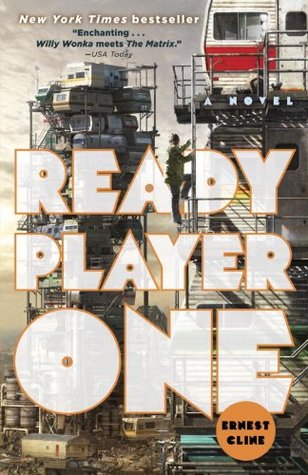
Ready Player One by Ernest Cline

Wade Watts lives with his aunt in a trailer stack on the outskirts of a US metropolis in 2044.  Both of his parents are dead, and his aunt hates him.  She only allows him in her trailer because she gets his food vouchers.  During the day, however, Wade is someone else.  He attends high school in a virtual reality online world known as OASIS, which he interfaces using a visor and a pair of haptic gloves provided by his charter high school program.  Wade does well in school, and yet his primary focus is on something else.  The creator of OASIS, James Halliday, began a contest at the time of his death.  Whoever is the first to find an easter egg within the immense OASIS universe will inherit his preposterous fortune. To find it, contestants will have to be versed in Halliday's personal interests, which revolve around 80's pop-culture, and especially nerd-culture: video games, movies, books, music, TV series, anime, cartoons, dnd, and japanese monster flicks.  Wade has spent the past several years as a "gunter," an easter egg hunter, and has immersed himself in that universe.  And, with a few lucky breaks, he might just be about to make a breakthrough.

The concept of the virtual world of OASIS is well-realized in this book.  Against the backdrop of a dystopian future United States, it makes sense that so many people would opt to instead find release from their bleak world by logging into a virtual universe with nearly endless new places to explore. But the heart of this book is how its characters make use of OASIS to revel in and experience the rich array of 80's culture that is infused into the novel.  It was a walk back down the memories of my childhood. Ferris Buhler. Goonies. Joust. Zork. Rush. Lord of the Rings. All of it is described and delivered with so much zeal by the author that you can tell how much he loves that source material.

If that weren't enough to compel the narrative forward, the book becomes even more of a page-turner as the stakes get higher. Along the way, we see Wade's character develop and mature, along with several of his closer friends and companions that he meets while pursuing Halladay's quests.  It's a fun, wild adventure, and at the same time a very satisfying trip down memory lane.  One of my favorite books of the past several years.

Saturday, April 23, 2016

Review: The Martian by Andy Wier

In the not-so-distant future, Mark Watney was one of a crew of six astronauts to land on Mars in the Ares 3 mission.  But just as their mission began, tragedy struck: a dangerous storm came upon their landing site and caused the team to abort their mission and flee the planet.  While the crew evacuated to the launch vehicle, Mark was struck by debris, launching him far from his companions, knocking him unconscious, destroying his biomonitor.  After a desperate, fruitless search, his crew was forced to presume him dead and leave the planet without him.  Despite all odds, however, Watney survived and made it back to the Hab.  The only problem was that he was stranded on a desolate, inhospitable planet with a finite supply of food and no way of communicating with with Earth.

So begins The Martian, a fantastic survival story by Andy Weir.  Much of the story is told through first-person logs that Mark uses to document his step-wise puzzle through each problem.  The tremendous appeal of this book, beyond the thrilling survival story, is that Mark makes use of a lot of real-life science in this tale.  His food problem comes down to a strict issue of calories: he has vitamins and protein tablets, but how can he produce the precise number of calories he needs in time to be rescued 4 years later during the next Ares mission?  Traveling to the next Ares site becomes a problem of power: how can he maintain his life support system and still have enough energy to power the rover using his solar cells?  If that doesn't sound like gripping reading, perhaps that's the genius of this book: despite its sometimes technical nature, its pacing, humor, surprises, and quality writing make it a gripping tale that kept me up many nights far past a reasonable bedtime.

Like many people picking up the book now, I read this after having watched the superb movie last year.  The movie is extremely true to the book in many parts, even down to extended stretches of the dialog.  But in other places, the movie deviates substantially from the book.  While I was initially concerned that reading it would be too much of a rehash of the movie, it quickly became clear that there was a lot more in this book to sink my teeth into.  And even those parts that do match up to the movie are just so thrilling that they still will keep you up late reading.

The movie was the best film I'd seen in years.  This book is right up there with it.  Highly recommended.

Wednesday, April 6, 2016

Review: Ender's Shadow by Orson Scott Card

Ender's Game was a book about Ender Wiggins, a genius among geniuses, and the boy who, almost unwittingly, became humanity's great hope in their battle against a powerful alien race.  Ender's Shadow is the story of Bean, who probably had a more remarkable mind than even Ender, but was just a few years behind him and played a less well-recognized role in the fateful events of that story.

This is most definitely Bean's book.  While his tale certainly overlaps with Ender's, and there are common characters, this isn't really just a retelling of the original novel.  A great deal of this book happens away from Ender, beginning with Bean's early childhood on the streets of Rotterdam, or in different parts of Battle School.  By being told from Bean's perspective, even the climax of this book, which directly overlaps with the conclusion of Ender's Game, feels different.  We learn a great deal more about what was going on during those events, much of which happened outside of Ender's frame of reference.  Bean is a fantastic character with a great deal of depth, and it was fun to live in his mind.

The book was a very fast read.  While other novels might take me over a month to pick through, I read this one cover-to-cover in about two weeks (I'm not a fast reader and have a busy life, so this is about as fast as it gets).  It's lively and fun, and I enjoyed it immensely.  If I have a criticism of the story, it's that huge chunks of the novel are long descriptions of what was going on in Bean's mind.  These introspections are often interesting and certainly drive the narrative forward, but I think they were a bit overdone in the book and certainly ventured into the realm of "telling, not showing."  Granted, it'd be difficult to tell the same story without them, because Bean as a character is incredibly secretive, introspective, and, for much of the book, very introverted.

This is apparently the first book in a series of six(!) books focused on Bean and his family, not all of which have been released.  I'm not sure if/when I'll dig into that series, but I certainly would recommend this book to anyone who enjoyed the original and wanted another chance to explore Orson Scott Card's Battle School.

Sunday, March 27, 2016

Review: Ashes of the Tyrant by Erin Evans

Having aided Raedra and saved Suzail from conquest, Farideh and her family venture to a land that weighs heavily on her and Havilar's upbringing, despite them never setting foot there: Djerad Thymar, the center of dragonborn culture in Faerun.  While the tale begins as a simple answer to a summons, the family quickly becomes swept up in the mysterious murder of a dozen young dragonborn.  All the while, Dahl is on the other side of the world, coming to grips with the fact that he might never be able to see Farideh again--the price of saving his family.

I'm of two minds on this book.  On one hand, this book does more to establish the culture of Faerunian dragonborn than any other work yet published by Wizards of the Coast.  Evans' dragonborn society is rich in tradition, history, and culture, and this book really dives into it.  You learn about the high politics of how leaders are chosen in their militaristic society, and how that tightly interfaces with how the daily lives of individuals play out within their complicated family structures.  It's a society that feels fresh and unique, distinct from anything I've seen before in the Realms (and probably elsewhere).  It's tight and detailed, and is brought alive with small details, expressions, and mannerisms unique to the dragonborn.  And yet, it still leaves room for individuals to distinguish themselves from others or, at times, reject the dragonborn society altogether.

On the other hand, in the end, I can't help but feel like not a lot really happened in this book.  There is an immediate concern in the novel, and that is ultimately solved.  And along the way, there are dozens of small plot points that are introduced, some of which grow in stature such that they loom very large by the novel's end.  But ultimately, the book seems largely there to set up the story in the next, which (if I'm understanding correctly) may well be the ultimate book in this series.  Some of this problem in direction may stem from the fact that apparently about half of the critical events in this book were dictated by the game designers and their publisher.  The story Ms. Evans really set out to tell is what will be in this next book.

I did enjoy the book. But the more I think about it, the more I think that the interventions of the WotC team really did hurt this novel.  It doesn't have the tight, satisfying feel of Fire in the Blood, and as a result it's not a strong a book.  Nevertheless, that doesn't dampen my enthusiasm for the series or its characters, and I'm very much looking forward to the next book in the series.

Wednesday, February 3, 2016

Review: Sword of the North by Luke Scull

The first book in this series, the Grim Company, was full of massive, shocking, world-changing events.  Scull built us a fascinating world and then wasted no time in tearing it down in breathtaking fashion.  Sword of the North unquestionably has its one share of realm-shattering changes, but, as its title suggests, this novel a bit more focused on its characters.  The headliner story follows Brodar Kayne and his companion, Jerek the Wolf, as they return to his homeland to help Kayne's son and wife.  Along the way, we learn about their past, and through the eyes of other characters introduced in the first book, see glimpses of what is transpiring in the North.  Meanwhile, Scull's other characters tell the tale of what is happening in Dorminia after the fall of its Magelord, and start to uncover the mystery of the City of Towers to the east.

I've long felt that one of Scull's greatest strengths was his ability to craft deep, unique, and interesting characters.  While we got to meet each of them in the first novel, it is in this book that they really start to shine.  Each has depth, biases, and just enough nobility to keep them likable despite their deep flaws.  Kayne was my favorite character from the first novel, and in this novel we re-live his storied life at both its high and low points.  Kayne is part hero, part pragmatist, and part seasoned warrior well past his prime.  For all of his flaws and weaknesses, and they are many, he has become one of my favorite fantasy characters.

There are many interesting themes that are explored in the novel as well.  What price is really worth paying for free will?  At what point should an honest, brave man surrender in the face of an unstoppable foe?  When a town full of scum and lowlifes is slaughtered by an invader, who is in the right?  There aren't firm answers provided to these questions, but the narrative lets you wrestle with them as you watch Scull's characters do their best to achieve their goals--and often fall short.

This is a genuinely excellent book.  While it certainly sets up a dramatic conclusion(?) to the story in the third book, I honestly have no idea what is going to happen, who will survive, or even what "victory" for the characters might actually look like.  Nevertheless, I know that it's going to be exciting to find out.

Sunday, October 25, 2015

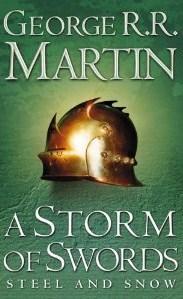
A Storm of Swords by G.R.R. Martin

This one was a long time coming.  By my best guess, I started this book in 2008 while in the process of finishing my dissertation, applying for jobs, and moving across country.  A lot happened around that time, and for a while I basically stopped reading for pleasure.  A few years back, I finally managed to work reading back into my life, thanks in large part to the wonderful portability (and built-in backlight) of my trusty Kindle Paperwhite.  But even then, it took a while to get back to this book.  The Sundering had arrived in the Forgotten Realms, bringing with it six new and (generally speaking) exciting books, as well as their sequels.  And there are always books to read for work.

I finally started making progress on this again last summer.  After having to take a month or so off for some work-related reading, I got back to it again a few weeks ago and have poured through it since.  Here are my comments on goodreads.
A Storm of Swords continues many of the strong points of that carried the prior two novels in the Song of Ice and Fire series.  There continue to be deep, fascinating characters from prior novels that often seem in well over their heads in this violent, dangerous world at war.  Each chapter tells the story from the perspective of different characters, each with their own voice and motivations.  The story remains unpredictable, and the events of this book are nothing short of realm-shaking.  As fans will point out, no character is ever truly safe.  Nevertheless, Martin managed to set this tone--and, indeed, allow some critical characters to perish--without making it seem forced or intentional, and there was really only one time when I felt like I was being teased.

That all said, there is one pretty substantial way that this book departs from prior novels: magic is real.  In books 1 & 2, despite references to magic, I generally found it easy to dismiss this as character superstition or mysticism.  It was never obvious to me that something that ventured into the true, overt supernatural must be part of the world.  But with book 3, there can really be no doubt.  While all may not be as magical as it seems, some form of divine-inspired magic seems a certainty.  When people talk about how good writers show the reader, and don't tell the reader, this is exactly what they're talking about: Martin allows us to discover this on our own, at our own pace.  I imagine that I was one of the last to believe.

I'm glad that I finally came back into the fold.  While there are a few books I want to read before I start up once again, A Feast for Crows is calling me...and a Dance with Dragons beyond that.

Wednesday, May 20, 2015

Book Review: Mrs. Frisby and the Rats of NIMH

My daughter and I read this back-to-back last week.  The last time I'd read it was when I was about her age (3rd grade).  The book is fantastic.  It provides a wonderfully imaginative, detailed world that feels inherently "real."  The ties to the actual biology of its animal characters -- mice, rats, crows, and owls -- feel real, even as we give even the "ordinary" versions of these animals credit for far greater intelligence and communication systems than they probably have.  The truly extraordinary individuals, whose uniqueness stems from their relationship with the mysterious NIMH, are introduced late enough in the story that they still feel natural, organic, and true.

Everyone loves the rat Justin in this novel.  But I actually found Mrs. Frisby to be a really good character.  She's a recent widow and single-parent of four children.  Nevertheless, despite the book presenting a fairly old-fashioned culture of male and female roles in these animal societies, Mrs. Frisby doesn't balk at her role as sole provider for her family, nor does she shy away from the frequent dangers into which her predicament forces her.  She's no daredevil, but she always does what is needed, without any more than a second thought.

A big chunk of the narrative is told as a story-within-a-story.  I often am not a big fan of this approach, but it worked really well in this book.  If the story was told chronologically, starting with the mice and rats at NIMH, it would be far harder to focus on the plight of Mrs. Frisby's family in light of the other story.  And by keeping the narrative on her family, the Rats of NIMH always maintain an air of mystery.

So, kudos, Robert C. O'Brien.  This is a great example of a book that is just as dramatic and exciting to an adult as it is to an 8-year old.  I've now read the book at both ages, and it will remains one of my favorites.

Saturday, April 4, 2015

Review: Vengeance of the Iron Dwarf

The Silver Marches at war.  All three dwarven citadels are surrounded by the massive many-arrows army of orcs and goblins, bolstered by drow from the underdark.  Sundabar and Nesme have fallen.  Silverymoon and Everlund are under siege.  Drizzt and his companions made it through the siege to Mithral Hall, but not before being separated from two of their friends: Regis and Wulfgar as they made their way through the Underark.  Food is growing scarce, the alliance of elves and dwarves seems shattered, and the drow plans for the surface seem unstoppable.

The backdrop against which Vengeance of the Iron Dwarf opens is bleak indeed, and it sets the stage for a book with a vast, epic story in which massive armies come to bear on one another.  This novel, in many ways, resolves the war that has been brewing the past several books between the Many Arrows tribe and the good peoples of the Silver Marches.  As one might expect for a Salvatore book, Drizzt and his friends are right in the thick of it, though are not necessarily the biggest players in the gambit this time around.  The action is far-ranging and unquestionably epic, and some parts of this book are Salvatore at his finest.  He writes of huge, vivid battles that turn on key moments that, usually, feel real and exciting.  The descriptions of hardship under siege were also painfully real, and brought a tremendous sense of urgency to the events of the story.

There are some new characters and plot lines that develop in this book, but this is a book about tying up loose ends.  In that way, it's pretty satisfying.  The events were unquestionably memorable, and I look forward to seeing their ramifications written and described in a future Forgotten Realms Campaign Guide.

I did feel, however, that the book was lacking some multidimensionality.  Tiago, the primary villain in this book, seems like little more than a one-dimensional thug.  None of the villains, in fact, had a lot of depth to them, with the exception of one character who is developing into a potentially interesting character.  Some of the protagonists, similarly, just seem bland at this point, and too "good" at everything in comparison with standard mortals.  The focus of this novel is more about resolving the conflict than character development, but my hope is that we see something deeper with the characters in the future books of this series.

In the end, this book is a worthy finale to storyline of the past three novels.  It's a fast-paced, fun read, with some fantastic, memorable moments that I look forward to reliving with the Sundered book club over the coming weeks.

Thursday, February 26, 2015

Review: Elfshadow by Elaine Cunningham

Arilyn Moonblade is a half-elf assassin.  Or, perhaps, Bounty Hunter might be the better term.  Almost unequaled with the blade, she works contracts for a number of shadowy organizations, most prominently among them the Harpers.  But recently, even as she successfully dispatches agents of the Zhentarim, someone else is hunting Harpers.  For each Zhentarim who falls, it seems, so too does a dear ally.  And worst of all, despite not knowing anything about it, signs are starting to point to Arilyn.

Elfshadow was my first Elaine Cunningham novel, and it apparently was her first set in the Forgotten Realms.  I think the thing that stood out to me the most about this book was its characters.  Arilyn is a great character: focused, ruthless, impatient, and stubborn, but still possessed of a strong moral compass.  Along the way she is joined by Danilo Thann, a bard of significant magical skill who spends his time posing as an aloof dandy.  The two make for an unlikely pair, but the fact that they are almost forced into companionship by the events of the story results in surprising synergy, in addition to some genuinely hilarious moments.

I found the plot to be interesting, even if a bit convoluted.  It delves into a lot of backstory about tensions between races of elves within the Realms, which was really interesting to learn about.  I've read my share of Realms books, but distinctions between Moon Elves, Sun elves, etc, have never been given much attention in those books.  The story made sense, but I will confess to occasionally having some trouble following it.  I also thought that Cunningham's writing ranged from excellent to a little bit clumsy in some areas.  I'm no genius with prose, to be sure, but I did feel that she had a tendency to overuse certain writing patterns.  For example, she often referred to Arilyn as "the half-elf," which works a few times per novel but not the dozens of times it was used here.

Overall, it was a fun read.  I'm probably going to read a few more of her books in the coming months at the suggestion of a goodreads friend, and I'm looking forward to seeing if these characters continue to appear.

Friday, December 19, 2014

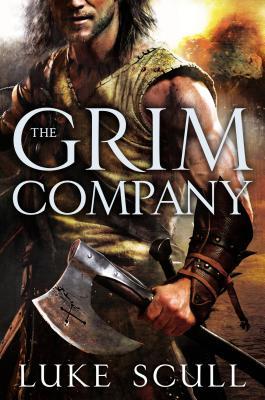
Review: The Grim Company

It's long overdue, but I finally was able to read Alazander's first novel, the Grim Company. Alazander, aka. Luke Scull, is one of the great module authors for Neverwinter Nights, both for his original work as well as his subsequent efforts with Ossian Studios. Here is my review of his book, which I posted at Goodreads:

The Grim Company by Luke Scull is set in a world where a group of mages rose to such power to defeat the gods themselves.  In the generations that passed since that conflict, the most powerful of the surviving mages took territory for themselves, and now wage war against one another.  While their fortified cities and impossibly powerful magic provides protection against the demons that encroach on the world now that the gods have been exterminated, the magelords rule as tyrants.  In Dorminia, home of the Magelord Salazar, a small group of resistance fighters have been quietly waiting for their moment to strike back.  While the odds seem close to impossible, they have a few tricks up their sleeves: the deep pockets of a successful merchant, drugs that permit them to escape the notice of Salazar's patrolling mindhawks, and Davarus Cole.  Cole, an orphan, possesses his father's enchanted dagger, Magebane, a magical blade that provides magical defenses against the Magelord's magic.  He would form a potent weapon, were it not for that two-copper head of his...

The thing that stands out the most about this book is the setting.  While I hope this is not offensive to say, Scull's world reminds me a bit of a post-apocalyptic Forgotten Realms: a high-magic world with a rich history and powerful, meddling deities...but set in the turmoil after mortals rose up to destroy the gods and rule on their own.  We "meet" only four of the Magelords.  Each is unique in his/her own way, and the personalities of their kingdoms follows from their masters.  It's a fantastic setting, one in which the history is every bit as exciting as the current events.

I am familiar with some of the author's prior works, and the thing that has always stood out to me was his ability to create three-dimensional, interesting characters.  That knack unquestionably continues in his novel.  We have Daravus Cole, the outrageously cocky, virtually clueless, wannabe hero.  There is Brodar Kayne and his companion Jerek the Wolf, two highlander mercenaries on the run from the North.  Sasha, the brave, adopted daughter of the resistance leader and his lieutenant.  And we have Isaac, the curiously adept manservant of Eremul, the halfmage.  It is an intentionally ragtag bunch, but each has his or her own, important role to play in the story.

As much as I ended up liking them by the novel's end, however, the thing I struggled with the most in this book was that it seemed to take a while for the depth of these characters to shine through.  Each of the heroes (antiheroes?) is presented, at least initially, as little more than the stereotype I describe above, as are most of the villains in the story.  Cole, in particular, is presented as so over-the-top-ridiculous that it was hard to continue reading through his initial strutting and immature angst.  With the exception of old Brodar Kayne, none of the characters were particularly likeable from the start of the book.  Furthermore, there were what seemed to be an inordinate number of penis mentions in the first third of the book, which I found to be off-putting (and I don't consider myself a prude).

As the book went on, however, we see more sides to each of the characters.  They are challenged, they crack, and sometimes, they find the strength to go on.  Or, they die.  Somehow, along the way, I found myself caring about all of the main characters--even Daravus Cole.  The plot develops quickly as well; far more happens in this book than I expected from the first in a series.  This book is not just about introducing threads to be wrapped up at a later time.  Rather, events happen that will permanently change the power structure of the region.  Despite the satisfying ending, there are more than enough open lines of mystery to make purchasing the next book an easy decision.  I am very much am looking forward to Sword of the North!

Monday, November 24, 2014

Review: Fire in the Blood by Erin M. Evans

Having survived the Shade's internment camps and come to grips with the missing years in their life, Farideh and Havilar travel to Suzail, capital city of Cormyr.  There, they hope to give Brin time to work out the problem of his engagement to the Princess of Cormyr, Raedra Obarskyr.  At the same time, Farideh must wrestle with the recent discovery that she is a Chosen of Asmodeus, and the terrible power that comes with such an arrangement.  Dahl and Vercaras also are in the city, and hope to investigate the disappearance of one of their Harper operatives in the city.  But hoping for any respite to get one's bearings proves impossible, for Cormyr is at war with the Shade, and life in a country at war is anything but predictable.

Fire in the Blood is my second Erin Evans book.  I began reading with The Adversary, which I thought was excellent.  This book, however, was another step forward.  The challenge in the Adversary was largely one of isolation.  This book, however, puts Fari and Havi at the center of a vast conflicts that erupt not just among political factions within Cormyr, but also between the nations of Cormyr and Netheril.  

All of the major characters undergo a great deal of development in this book.  Havilar must wrestle with the strains that reality place on her now-adult relationship with Brin, who is pulled between duty to his country and his love of Havilar.  Farideh must continue to struggle with her relationship with Lorcan, the half-devil, and the question of whether to pursue it as a romance or write it off as nothing more than the pact.  The character, however, who really surprised me in this book was Dahl.  After returning, unexpectedly, to field operations in the Adversary, Dahl is back in full action in this book--and proves time and again to be exceptionally good at his job.  He continues to be plagued by his fall from paladin-hood with Oghma, but his regrets over his past no longer smother him.  In fact, he often thrives, and may be the most effective character in the book.  We are also treated to a full development of Princess Raedra, who proves to be a nuanced, powerful figure in her own right, with no shortage of humanity.  In many ways, this book is her story, and it's worth every page turn.

As with the Adversary, all of this goodness is rooted firmly to Forgotten Realms lore, both on Toril itself, as well on other planes, including the nine hells.  There are nods to current events in the realms, including the current Tyranny of Dragons storyline.  There are also references to events in other recent Realms books, such as the siege of Marsember in Troy Denning's The Sentinel and the future massing of armies to attack Myth Drannor, as told in Ed Greenwood's The Herald.  I also found neat connections to other Realms stories that I'm reading.  For example, Raedra made mention of Alusair Obarskyr, the Steel Regent, a prominent figure in Cormyr's history.  She also made an appearance in Tiberius's Neverwinter Nights module, Saleron's Gambit, which I was playing as a read this book.  It is these kinds of connections that makes reading and playing in the Forgotten Realms so much fun.

This was the best book I've read all year long, and I've had a lot of fun reading this year.  Highly recommended to everyone.

Friday, September 26, 2014

Rise of the King by R.A. Salvatore

Having tied up some loose ends in Night of the Hunter, Drizzt and his companions begin their trek toward Mithral Hall.  There, Bruenor hopes to reclaim his throne and rectify what he views as his error in permitting the orc king of Many Arrows to establish a peaceful kingdom that borders the Silver Marches.  Little do they realize that the Drow are already moving, and war is coming to Luruar.  Orcs, giants dwarves, elves, men, and even dragons clash in this book of conflict and struggle.

This is among the most enjoyable Salvatore books that I've read, and in my view is definitely the best of the Sundering era.  The action is fast, furious, and epic.  While other books have featured exciting, small squad skirmishes, this one gives us those as well as epic battles for the fates of cities.  On top of the battles, we are treated to reconnaissance, espionage, and another hearty helping of political machinations among the Drow.

Regis, who in many ways was the star of The Companions, took something of a back seat in Night of the Hunter.  In this book, however, he was back to playing a central role, and in my view has easily become the most dynamic and interesting character in the crew.  Furthermore, while Jarlaxle spent Night of the Hunter reacting, in this book he seems to be back on the offensive.  As we might expect, of course, exactly what he's after still has yet to become clear.  Beyond those two, I'm not sure that we see a lot of significant character development, aside from some continued discussions between Drizzt and Catti-brie on the inherent nature of orcs and goblins.

I really enjoyed the book, and will, of course, look forward to reading the next in the series when it is published in 2015.